SpiderDoll
More games to play
 Spider Hero Street FightSide-scrolling brawler where you web-sling through city streets fighting villains.
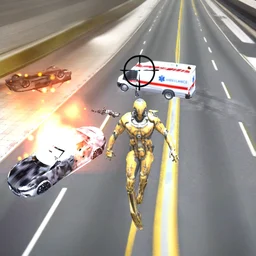 Super Crime Steel War HeroDrive cars, blast criminals, and complete missions as an armored steel hero.
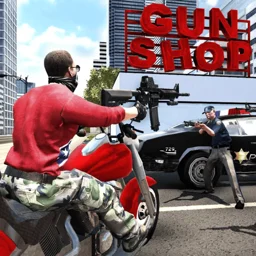 Grand Action Simulator: New YorkRule New York as a criminal in this open-world GTA-style crime game.
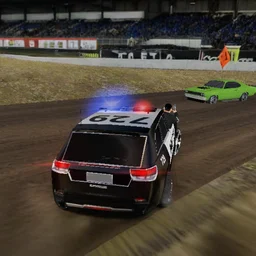 POLICE Chase SimulatorDrive a police car and chase down criminals through city streets.
 Amazing Strange Rope PoliceBack to the main game
SpiderDoll puts you in control of a floppy spider-hero ragdoll that must swing, spin, and survive a series of increasingly tricky obstacle courses. Built entirely on 2D physics, every jump and web-shot behaves according to real momentum, so mastering the game means learning to read angles and timing rather than just pressing the right button.
How the Web-Swinging Works
Each level gives your ragdoll a limited set of web anchors you can grab onto. When you fire a web, the game calculates the arc of your swing based on distance, attachment point, and the speed you were already carrying. Release too early and you fly wide; release too late and you drop short. Getting that release window right is the entire skill loop, and it clicks differently for each player.
Difficulty and Level Design
SpiderDoll does not hold your hand. Early levels introduce single swings across gaps, but the difficulty ramps quickly into multi-swing chains, spinning platforms, and timed hazards that punish hesitation. The ragdoll physics mean a near-miss can send your character tumbling in an unexpected direction, so patience and repetition matter more than reflexes alone.
| Difficulty Stage | Main Challenge | Key Skill Needed |
|---|---|---|
| Opening levels | Single gap crossings | Basic release timing |
| Mid-game levels | Chain swings on moving anchors | Momentum management |
| Late levels | Hazards plus tight landing zones | Precise angle control |
Physics Ragdoll vs Traditional Platformer
Most 2D platformers give you a rigid character with predictable jump arcs. SpiderDoll replaces that predictability with a floppy body that reacts to every collision. Limbs flail, the torso rotates freely, and landing awkwardly can bounce you off a platform instead of sticking. That unpredictability is the appeal: no two runs through the same level feel identical.
| Feature | Traditional Platformer | SpiderDoll |
|---|---|---|
| Character movement | Fixed jump curve | Physics-driven swing arc |
| Landing behavior | Lands cleanly on surfaces | Ragdoll bounce on impact |
| Failure feedback | Falls to pit | Flails and tumbles visibly |
| Skill focus | Button timing | Angle and release judgment |
Tips for New Players
Start by swinging low rather than aiming for maximum height. Low swings are slower and easier to control, which lets you study the geometry of each level before attempting faster runs. Watch where the natural arc of your swing points before you let go, and aim to release at the top of the arc where horizontal speed is highest. If a level keeps beating you, try approaching the first anchor from a different angle entirely.
Why Players Keep Coming Back
SpiderDoll has collected a 4.5 rating from over 9,600 players, which speaks to how satisfying a clean run feels after repeated attempts. The combination of physics unpredictability and clear cause-and-effect feedback makes failure instructive rather than frustrating. Each attempt adds a little more intuition about how the ragdoll moves, and eventually a level that seemed impossible clicks into a fluid chain of swings.